Hi Philippines
Ferry or Domestic Flight in the Philippines?
Compare the complete journey—terminals, waiting, bags, arrival transport and your energy—not only the time printed on a ticket.
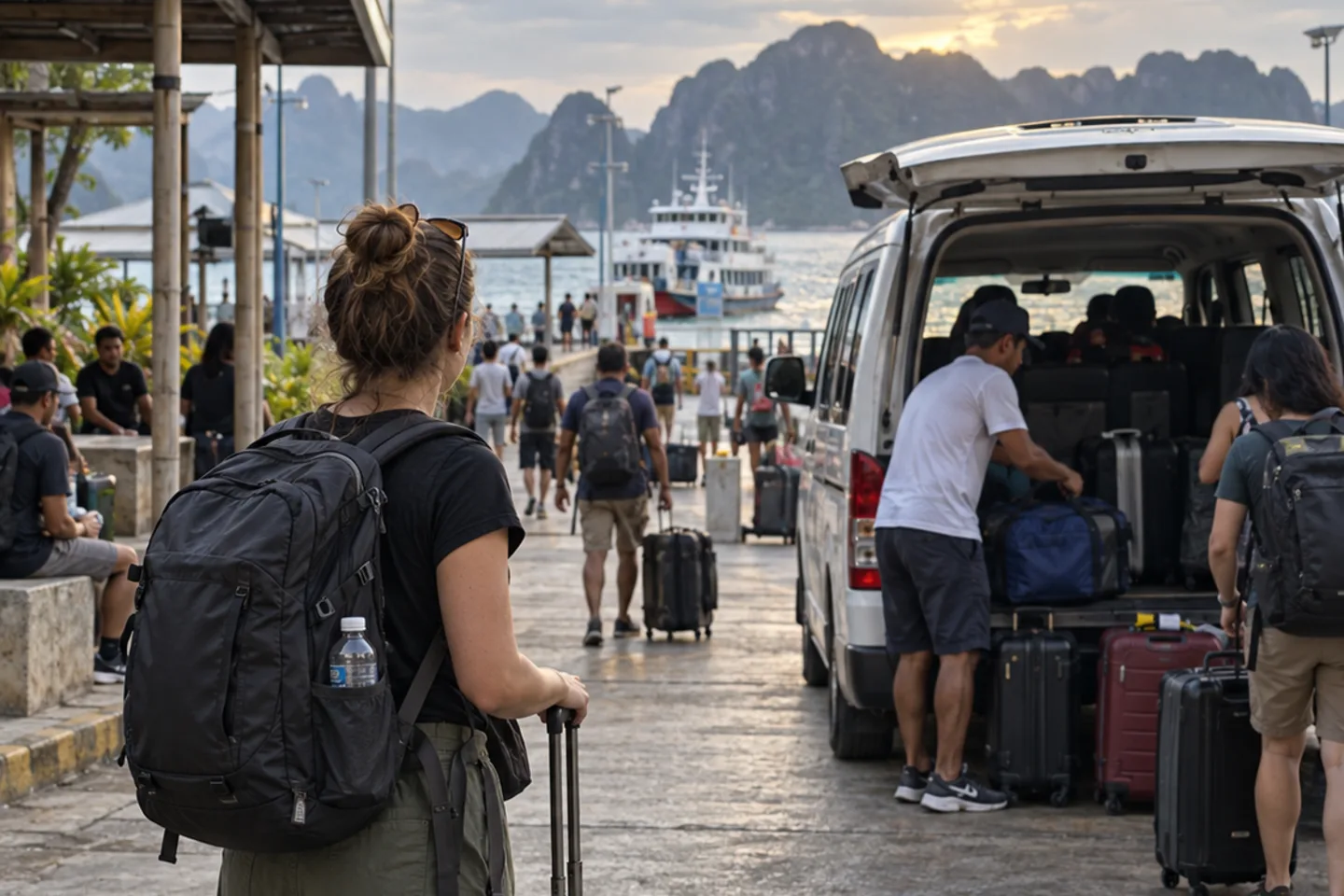
Short answer
Neither ferries nor domestic flights are always the better way to move around the Philippines. Compare the whole chain from one room to the next: access to the terminal, the waiting process, luggage, the moving leg, transport after arrival and the energy left at the end.
A short-looking flight can sit inside a long airport day. A simple-looking ferry can involve an awkward port transfer at either end. The right choice depends on the exact route and how it fits the rest of the trip.
First ask whether both choices are real
Before comparing the experience, confirm which routes actually operate on your dates. An option found in an old itinerary or search result may not match the current operator, terminal or service pattern.
Use direct airline or ferry-operator information for the live pieces. This guide does not publish fixed schedules, fares, baggage rules or disruption promises.
Compare the complete journeys
Write each option as a chain rather than a ticket:
Ferry: accommodation → port transfer → terminal process → wait → crossing → arrival port → next transfer → accommodation
Flight: accommodation → airport transfer → terminal process → wait → flight → arrival airport → next transfer → accommodation
The chain with the shorter moving segment is not automatically the easier day.
Terminal access
Look at the starting address, not only the island name. A port may sit naturally beside the current base, or it may need a separate road leg. An airport may be close to one part of a destination and inconvenient from another.
Ask:
- Which terminal does this specific service use?
- How will you reach it from the actual accommodation?
- Is the arrival terminal near the next base, or only near the destination label on the ticket?
Waiting and handoffs
Both choices include time before and after the moving leg. Compare how many handoffs the day contains and which of them feel fragile.
Do not invent a universal check-in buffer. Follow the current instructions from the airline or ferry operator you book, then add personal margin for traffic, finding the correct entrance and moving through an unfamiliar terminal.
Luggage handling
The useful question is not simply whether a bag is “included.” Check the current allowance, size rules and handling process for the exact ticket and operator.
Consider how the bag affects the full day:
- Can you manage it through the terminal and last-mile transfer?
- Does the trip include wet gear, dive equipment or something oversized that needs direct confirmation?
- Which essentials must stay accessible if the main bag is out of reach?
What to Pack for Island Transfers helps separate the travel-day layer from the main bag without assuming one operator’s policy.
Arrival transport
Reaching the destination terminal is not the same as reaching the stay. Compare the onward road or boat leg, how you will arrange it and whether arrival leaves a comfortable margin before dark or another fixed commitment.
Avoid assuming that taxis, vans, ride-hailing or hotel pickups work the same way at every port and airport. Confirm the last mile with the accommodation or a current local source.
Flexibility when plans move
Read the current change, cancellation and disruption terms before booking either mode. Policies vary by operator and ticket type, so this guide does not summarize them as a universal rule.
Instead, ask what the rest of the trip can absorb. If the leg moves, is there room to stay another night, move an outing or protect the international departure? How to Plan a Weather-Flexible Philippines Trip helps make that buffer useful.
For a sea leg, Ferry Cancellations and Bad Weather explains which current advisories to check and how to approach a changed sailing.
Traveler energy
Count the effort of early starts, queues, transfers, carrying bags and finding the next ride. A route can be efficient on paper and still consume the day’s attention.
This matters most when the next plan is demanding. Avoid attaching a must-do boat day, dive or long road outing to an arrival that only works when every handoff is perfect.
When a ferry may fit
A ferry may fit when the port-to-port link follows the route naturally, both terminals work with the chosen bases and the water crossing does not create a fragile onward connection.
It may also fit when keeping the trip at surface level avoids an airport detour. That is route-specific, not a rule that ferries are always simpler.
Read What Ferries Are Actually Like for the terminal-day mindset. If Cebu and Bohol are the actual pair, Cebu to Bohol follows that journey beyond the crossing itself.
When a domestic flight may fit
A domestic flight may fit when the alternative surface chain is long or indirect, the airports align with both bases and the flight protects meaningful time in the places you came to see.
It is less convincing when reaching and leaving the airports adds several awkward handoffs, or when it creates a tight connection with another fixed departure. Compare actual addresses and onward plans before assuming the air option saves the day.
A calm decision check
For each real option, write down:
- starting accommodation to departure terminal;
- operator instructions and comfortable personal margin;
- current baggage terms for the ticket you would buy;
- the moving segment;
- arrival terminal to the next accommodation;
- change and disruption terms you need to understand; and
- what you expect to have energy for after arrival.
Then choose the chain that fits the trip, not the mode that sounds fastest in isolation.
Common mistakes
- Comparing only the crossing time with the airborne time.
- Searching by destination name without checking the exact terminal.
- Assuming baggage and change terms are standard across operators.
- Ignoring transport after landing or docking.
- Building a same-day chain with no room for one part to move.
- Treating one mode as universally cheaper, faster or more reliable.