Hi Philippines
What Ferries Are Actually Like
Terminals, tickets, waiting rooms and the small steps that make ferry days less confusing.
Short answer
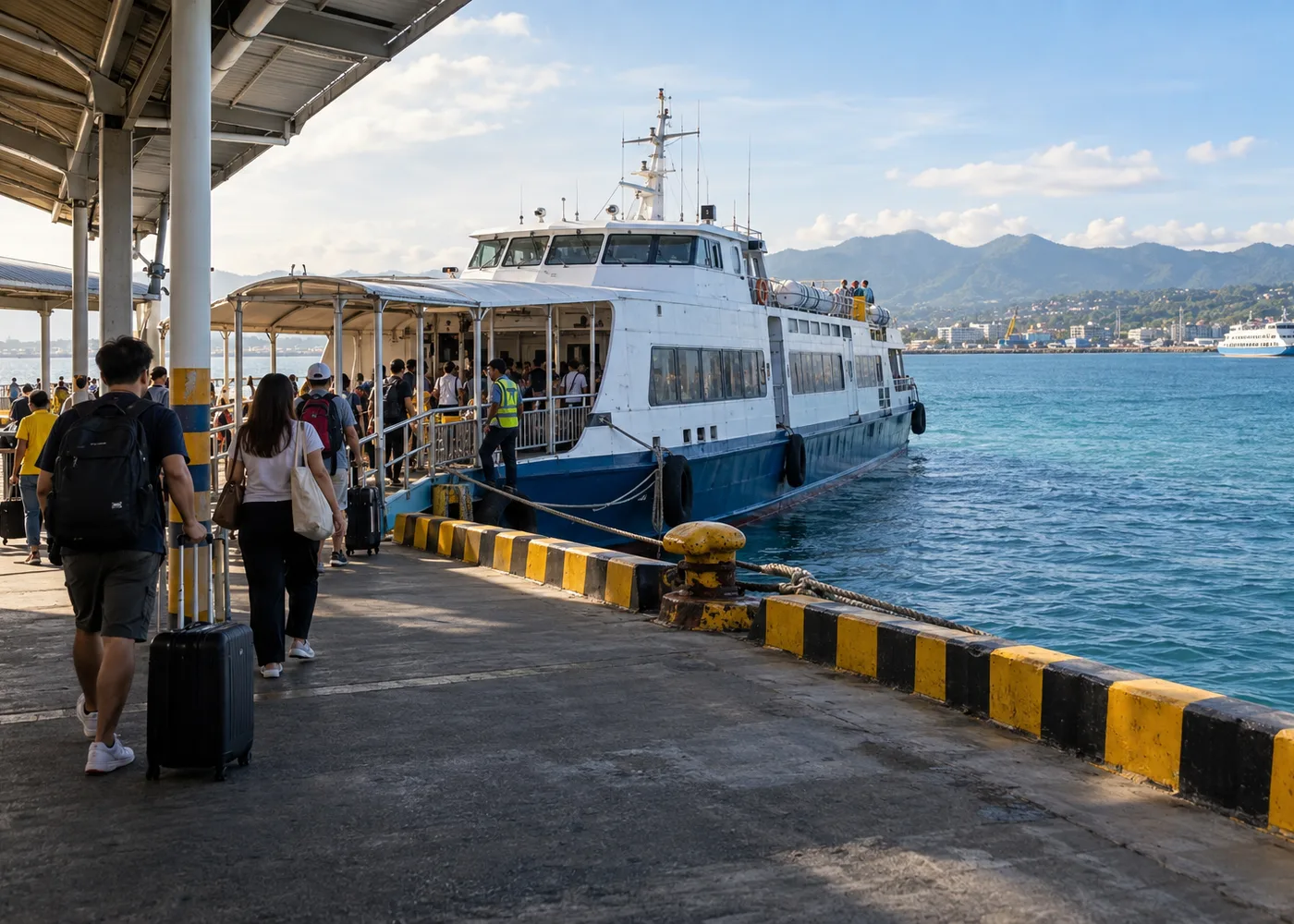
A Philippine ferry day is usually a chain of small steps — tickets, terminal fees, bag checks, waiting, boarding by announcement — not a single neat departure like a metro train. Leave buffer, bring cash and patience, and treat published times as plans that can move.
Who this helps
Useful if you are connecting islands by sea for the first time, stacking a ferry before a flight, or planning a route where the water crossing is the hinge of the day. Less urgent if you are flying every leg and never touch a port.
If both modes appear possible for the route, Ferry or Domestic Flight in the Philippines? compares the complete journeys rather than only the time on each ticket.
Prepare before you go
- Confirm the route, date and operator close to travel. Schedules, vessel types and inclusions are time-sensitive — recheck the operator or ticket seller rather than copying an old post.
- Know how you will reach the terminal (not just “the town”). Port areas are often outside the center and can need their own transfer.
- Carry a cash float for terminal fees, snacks and local transport around the port. Cards are not always the easiest option at every counter. See Cash, Cards and ATMs.
- Keep ID and ticket confirmation easy to reach — phone battery and offline screenshots help when signal dips.
- Pack so a full travel day is tolerable: dry layer, water, motion-sickness plan if you need one, and a bag you can manage in a crowd. What to Pack for Island Transfers separates what stays within reach from what can travel in your main bag.
- If you need data on arrival, sort SIM or eSIM before you are stuck between terminals.
What the journey usually looks like
Exact procedures vary by port and operator. This is the common shape, not a universal script:
- Get to the terminal with enough time for queues and confusion.
- Buy or confirm tickets and any required terminal or passenger fees.
- Check bags if the route requires it; keep day essentials with you.
- Wait in a hall or designated area until boarding is announced.
- Board when called — often by destination, class or ticket type, not always by neat numbered gates.
- Settle into your class or seat and expect the vessel to leave when operations and weather allow.
- Disembark and continue — another local transfer to your stay is normal.
The journey time you care about is door-to-door: hotel → terminal → wait → crossing → arrival transport → next bed. Ticket duration alone understates that.
When things go sideways
Ferries can delay, cancel or change vessel because of weather, sea conditions or operations. Treat that as a known risk, not a rare surprise.
Before leaving for the port, check current marine advisories and your exact sailing. That guide also explains what to ask about your ticket if the service changes.
- Do not stack a tight onward flight immediately after a ferry unless you truly have no choice.
- Have a backup night or flexible booking when the ferry is the only way to make a flight the same day.
- If you miss a sailing, ask the operator or ticket seller about the next available option — do not invent a timetable from memory.
- Keep snacks, water and a charged phone; waiting rooms can stretch.
- Keep the rest of the route movable where you can: How to Plan a Weather-Flexible Philippines Trip shows how to pair a fixed crossing with an adaptable day.
- For wider arrival friction after a long travel day, First 24 Hours in the Philippines helps reset expectations.
Destination differences (editorial)
Ports do not all feel the same:
- Busy Visayas hubs (think Cebu-linked routes) can feel larger, with more ticket desks and more crowd energy.
- Smaller island ports can feel simpler — and sometimes less English-signed or less card-friendly.
- Palawan legs in classic Coron / El Nido trip plans are often a mix of road and sea connections; the water segment is only one part of a transfer day. See Palawan Without Rushing, Coron and El Nido for route fit, not for live ferry tables.
Always verify the specific route you are booking. A tip that was true for one island pair last year may not apply to yours this month.
Common mistakes
- Treating the published sailing time as a guaranteed door-to-door plan.
- Arriving with no cash for fees or local transport around the port.
- Booking a same-day flight with no buffer after a ferry.
- Assuming every ferry has the same boarding process or luggage rules.
- Underestimating how tiring a “short” crossing plus two terminal transfers can feel.
Compact checklist
- Route, date and operator rechecked close to travel
- Plan to reach the correct terminal, not just the town name
- Cash float for fees, snacks and port transport
- ID + ticket confirmation accessible offline
- Buffer before any same-day flight or fixed tour
- Water, light layer, motion plan if needed
- Next-leg transport idea after arrival (ride, hotel pickup, or local advice)