Hi Philippines
Cash, Cards and ATMs in the Philippines
Cards are useful, but cash is still the quiet thing that keeps island days moving.
Short answer
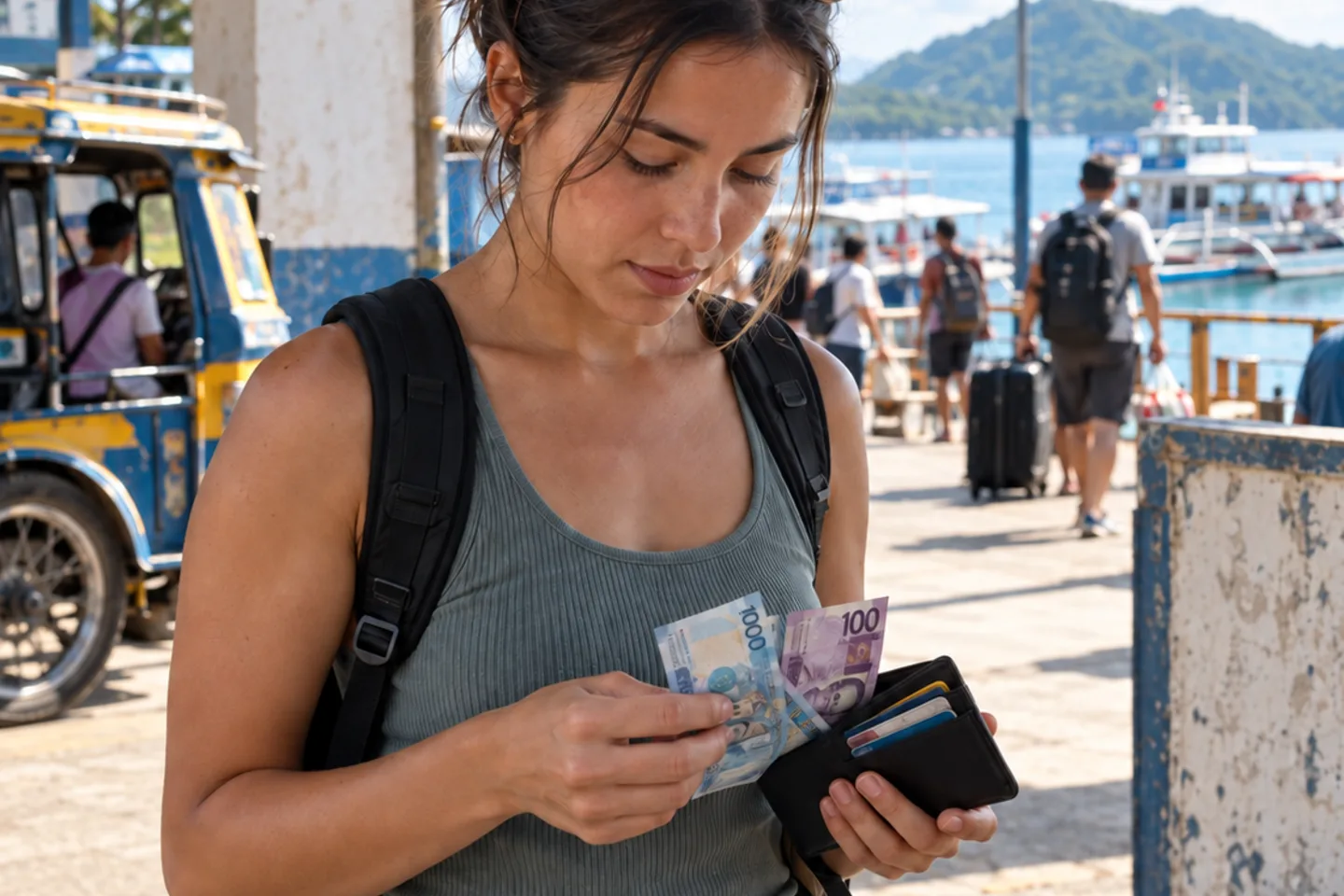
Cards work well in many hotels, malls and larger restaurants. Cash still keeps island days, small rides, markets, some tours and ferry terminals moving. Arrive with a plan for both — and withdraw before you leave a place with reliable machines.
Who this helps
Useful if you are hopping islands, booking boats, eating at small spots or arriving tired on day one. Less dramatic if you stay only in large cities and card-heavy hotels — but a cash float still softens friction.
Prepare before you need it
- Decide a cash float for arrival night and the first island move. See Your First 24 Hours in the Philippines.
- Know which days are cash-heavy: ferry terminals, island-hopping, markets, tricycles, small eateries. What Ferries Are Actually Like is one of those days.
- Check your card issuer’s travel settings and charges before you leave; keep a backup card separate from your daily wallet when you can.
Using ATMs
An ATM operator may charge for a withdrawal, and your own bank or card issuer may charge separately. Check the fee and amount shown on the machine before you confirm. Withdrawal limits and machine availability vary, so an old recommendation for one bank is not a reliable plan for your trip.
If a machine is offline, empty or declines your card, try another machine in a larger hub and use your backup payment method if needed. Withdraw before a ferry or smaller-island stay rather than leaving your cash plan to the last terminal.
Bringing currency across the border
The rules for foreign currency and Philippine pesos differ. If you carry more than US$10,000 equivalent in foreign currency or covered foreign-currency bearer instruments into or out of the Philippines, you must declare the whole amount. If you carry more than PHP 50,000 per person in Philippine currency, you need prior written authorization from the Bangko Sentral ng Pilipinas (BSP) and must declare the whole amount. BSP authorization for more than PHP 50,000 is limited to specified purposes; it is not a routine way to bring extra holiday cash.
Required currency declarations can be completed through the eTravel Customs System or at designated Customs counters. The entry and eTravel guide explains the wider before-flight process. Check the current BSP cross-border currency guidance and Bureau of Customs notice before travel, especially if you are near a threshold. These rules concern currency and covered instruments, not the balance on a payment card.
Mobile wallets are optional
GCash GTourist may be useful for eligible foreign visitors, but sign-up, verification and activation depend on GCash’s current rules. Check those rules before relying on it. Keep cash and cards available even if you plan to use a wallet.
How a money day usually goes
- City or larger hub — easier card use; better ATM density.
- Before a smaller island or boat day — withdraw what you reasonably need while machines are nearby.
- On the island / at the port — expect more cash requests; do not assume every counter takes cards.
- Keep a small reserve for an unexpected evening ride or terminal fee.
Exact peso amounts depend on your style, season and how many boat days you book. Prefer a comfortable buffer over false precision.
When money plans fail
- Card declined — have cash or a second card; contactless and chip behavior varies.
- No change for large notes — smaller denominations help for local transport and snacks.
- Tour or terminal wants cash only — common enough that it should not surprise you; confirm when you book when you can.
If you also need data for maps and ride apps while hunting an ATM, sort connection early: SIM or eSIM?.
Destination differences (editorial)
- Large cities / mall corridors — cards are more common; ATMs denser, though queues and outages still happen.
- Tourist towns with boat economies — cash demand rises around tours and ports even when hotels take cards.
- Smaller islands — fewer machines; running low can mean waiting for a boat day back to a hub.
For Palawan pacing context (when cash buffers matter around transfers), see Palawan Without Rushing, Coron and El Nido.
Common mistakes
- Arriving on a boat day with almost no cash.
- Assuming every restaurant and driver takes cards because the hotel did.
- Waiting until a small island to “just use the ATM.”
- Treating a mobile wallet as your only payment method.
Compact checklist
- Cash float for arrival night
- Withdraw before leaving a hub with reliable ATMs
- Backup card stored separately when possible
- ATM fee and amount checked before confirming
- Currency rules checked if traveling near a declaration threshold
- Smaller notes for local transport and snacks
- Connection plan so you can find machines and message hotels